Coordinating front desk, floors and maintenance remains most hotels' daily friction point: handover notes that get lost, incidents without history, execution that varies from one shift to the next. The recurring question is badly framed. It is not “hub. or Mews”, but “which layer am I missing, and how do they talk to each other”.
In shortIn short: do you have to choose between hub. and Mews?
No — and the question rarely arises in those terms. Mews is a PMS: it manages reservations, the guest journey, billing and the stay. hub. for hotels is an operational execution layer: it manages handover notes, checklists, shift handovers and incident traceability. The two systems are connected through the Mews Connector API and cover two different floors of the same operation.
hub. and Mews compared: who covers what
The table splits the functions by operating layer. It does not rank one product above the other: it shows where each is at home, and where it does not claim to be.
Scope
Mews
hub. for hotels
Reservations, distribution, channel management
Core business
Not covered — the PMS stays in place
Billing, payments, guest accounting
Core business
Not covered
Digital guest journey
Core business: online check-in, mobile key, upsell
Not covered
Room status and housekeeping
Native module, reinforced by the Flexkeeping acquisition
Core business, synchronised with the PMS
Maintenance and technical incidents
Covered
Core business, with a per-room history
Handover notes, announcements and shift handover
Internal team messaging
Core business, a dedicated and traceable flow
Checklists and management routines
Covered
Core business
Standardising practices across properties
Multi-property management
Replication of standards from one property to the next
Compatibility with another PMS
Not applicable
Connects to the PMS in place, whichever it is
Human support at roll-out
Partner network
Included, by GROW.Hospitality consultants
What is Mews?
Mews is a cloud-native property management system (PMS) covering reservations, check-in and check-out, billing and pricing. The platform claims more than 1,000 integrations on its marketplace and has expanded into floor operations with a native housekeeping module, reinforced by the acquisition of Flexkeeping in September 2025.
The PMS holds the reservation, the billing and the stay: the hotel's administrative backbone.
In May 2026, Mews announced its move towards a unified platform, intended to cover a broader perimeter than the PMS alone.
What is hub. for hotels?
The hub. for hotels app is hotel operations software that centralises handover notes, room statuses, technical incidents and management routines in a single interface. It does not manage reservations: it connects to the PMS in place and drives execution on the floor.
The product is aimed at independent hotels, boutique hotels and growing groups, with a module-by-module roll-out and support provided by GROW.Hospitality's consultants.
Housekeeping and room status. Real-time visibility on statuses, to remove verification calls between the front desk and the floors.
Maintenance and technical incidents. Reporting, assignment and tracking through to closure, with a history viewable per room.
Cross-department handover. Each shift accesses what the previous one left, without an oral reconstruction at the end of service.
Announcements and handover notes. Targeted distribution of priority information to the teams concerned, while they are on duty.
Checklists and floor routines. Framing of daily gestures, with an execution control readable by management.
Five operating situations, two different answers
For each one, the same reading grid: what the PMS covers, then what the execution layer adds.
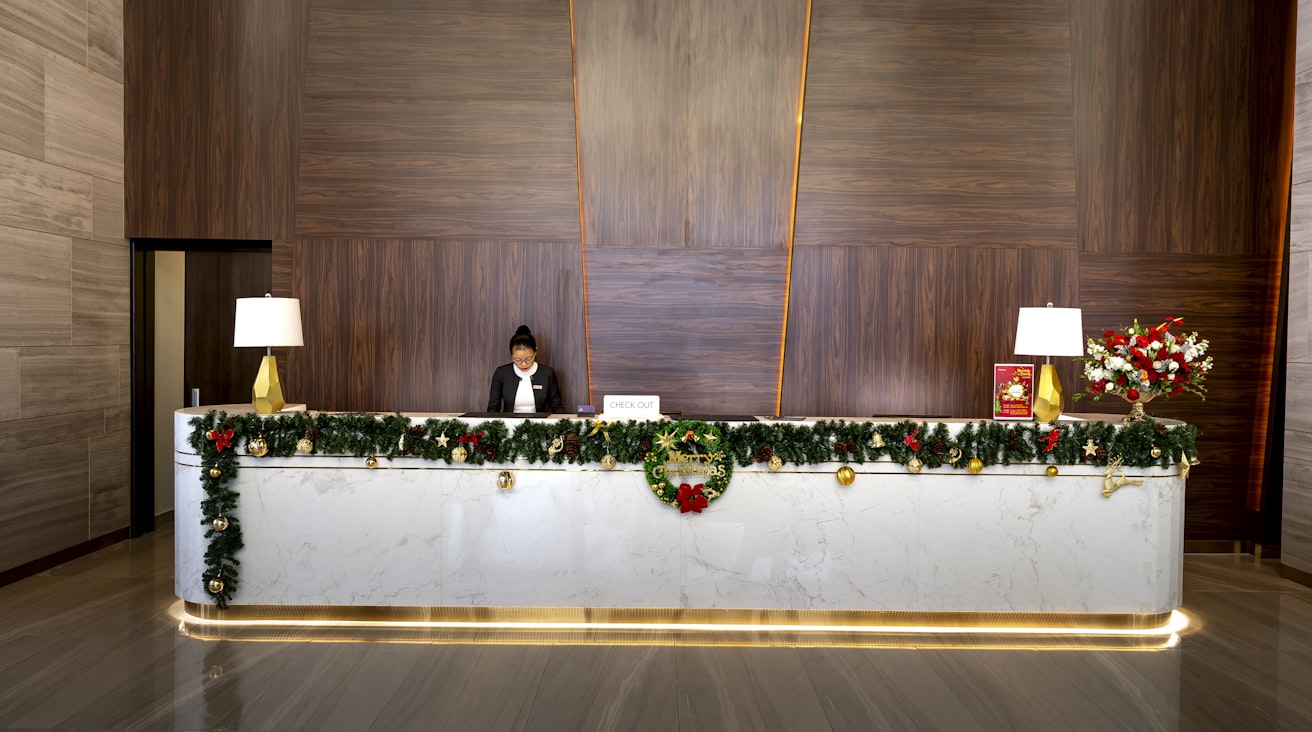
At the front desk, everything that is not on record ends up being asked out loud again.
1. Coordinating front desk, floors and maintenance
Cross-department coordination rarely fails for lack of a tool, but because each department works on a different version of the same information.
Mews synchronises room statuses between the PMS and floor teams through its housekeeping module, with automated assignments and a mobile app.
hub. adds the layer that is missing once statuses are synchronised: why a room is blocked, what has already been tried, who must intervene next. It is the difference between knowing a room's state and knowing what to do with it.
2. Passing handover notes between shifts
A handover that rests on five minutes of conversation at the end of service systematically loses part of the critical information.
Mews offers internal messaging that lets teams exchange without leaving the platform.
hub. treats the handover as a structured object, not a conversation: what stays open, what has been promised to a guest, what must be checked when taking over. The next shift reads a state, not a chat thread.
3. Tracking technical incidents
An incident that repeats without an intervention history signals a traceability defect, not an equipment defect.
Mews lets you create and track maintenance tasks, and block a room from sale.
hub. keeps the history per room and per piece of equipment: the third air-conditioning failure in a month shows up with the two previous interventions. That is what lets you arbitrate between repairing and replacing, instead of treating the symptom.
4. Harmonising practices across several properties
A hotel group does not duplicate tacit know-how: its standards must exist outside its collaborators' heads.
Mews manages several properties from a centralised interface, on the reservations, pricing and billing side.
hub. replicates checklists, handover notes and routines from one property to the next, and gives head office a comparable reading of floor execution across the whole portfolio.
5. Driving the guest journey and reservations
On reservations, pricing and the guest's digital experience, the PMS has no alternative: it is its job.
Mews covers the booking engine, online check-in, the mobile key and upselling.
hub. does not position itself on that perimeter. Hotels that deploy it keep their PMS, which makes the product compatible with Mews as with any other system in place.
hub. for hotels and Mews are connected by API
hub. for hotels connects to Mews through the Mews Connector API. The two tools do not replace each other: Mews knows what was sold and to whom; hub. knows what was done and by whom.
That double reading is what makes the whole thing useful. A PMS records a reservation, a stay, an invoice. It does not record whether the handover note was read by the night team, or what was attempted during the two previous interventions on room 204's air conditioning. The connection brings PMS data down to the floor, and sends what happens on the floor back up into the PMS.
What data flows between Mews and hub.?
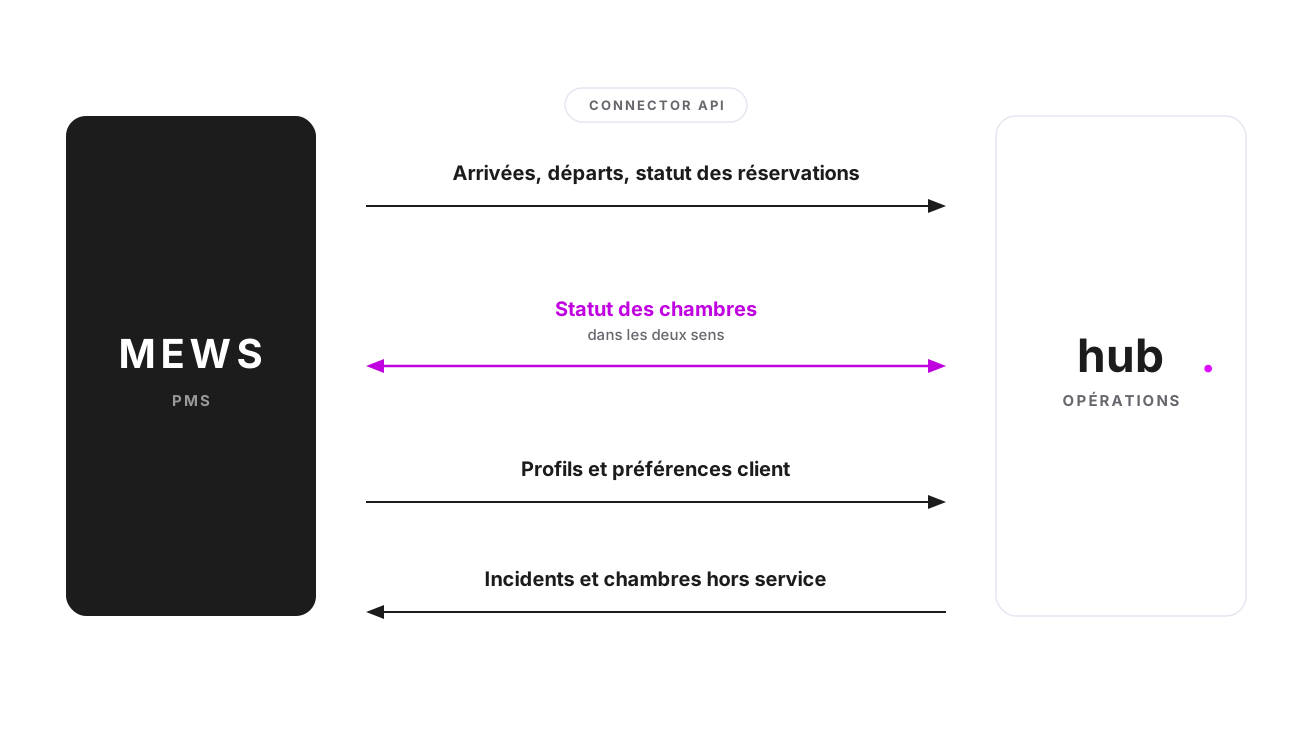
Four flows are active, one of them two-way.
Data
Direction
Effect on operations
Arrivals, departures and reservation status
From Mews to hub.
The day's movements feed the team planning and the service checklists. No more printed list in the morning, no more outdated version circulating at 3 pm.
Room status
Both ways
A room set to turn-down or check-out in hub. reaches Mews immediately, and vice versa. Front desk and floors work on the same information at the same moment.
Guest profiles and preferences
From Mews to hub.
VIP status, allergies, recurring requests, stay history: what is entered at reservation becomes a note readable by teams on duty, at the right moment.
Incidents and out-of-order rooms
From hub. to Mews
A room blocked for a technical incident in hub. becomes unavailable for sale in Mews, with no double entry. The block is lifted the same way when the incident closes.
The four Connector API flows; each arrow follows the direction of the data.
What the connection changes in a day of operations
The value of an integration is not measured by the number of synchronised fields, but by the number of checks it removes.
In the morning, the head housekeeper opens hub. and sees the real departures, not last night's forecast. Turn-down priorities are already ranked.
At 11 am, a leak is spotted in 204. The incident is entered once, with a photo. The room leaves the sellable stock in Mews within the second, maintenance receives the request, and the history of previous interventions comes up.
At the end of the shift, the handover no longer consists of recounting the day but of validating what stays open: two incidents in progress, a late VIP arrival, a quiet-room request already on record.
Do you need to change PMS to deploy hub.?
No. hub. connects to the PMS in place and imposes no migration. The Mews connection is established through the Mews Connector API, on the hotelier's authorisation from their own Mews environment. No historical data import is needed, and the PMS remains the source of truth for reservations and billing.
You have no PMS yet, or you must replace it. The priority is the PMS. Mews is a solid choice on that perimeter. The operational layer comes next, once the backbone is in place.
Your PMS works but floor coordination keeps derailing. The PMS is not the problem, and changing it will fix nothing. What is missing is the execution layer: handover notes, handovers, incident traceability.
You run several properties with heterogeneous practices. The stake is neither the PMS nor the tool, but the replication of standards. The first question to ask is about support, not software.
The hub. app centralises handover notes, checklists, room status and incident tracking in a single interface, connected to your PMS. Upstream, GROW.Hospitality's consultants audit the existing operations and define the standards to deploy — because a tool does not fix a process that was never written.
A 15-day trial lets you test the platform in your real operating context.
See hub. wired to your own Mews.
Twenty minutes, your Mews environment and your real movements of the day. If your PMS is not Mews, the demo still happens: the connection sits on the PMS in place.
No. The hub. app manages neither reservations, nor billing, nor pricing. It covers operational steering on the floor (handover notes, housekeeping, maintenance, handovers) and works alongside the PMS already in place in the property.
Is hub. an alternative to Mews?
No — the two products do not address the same perimeter. A hotel looking to replace its PMS compares Mews with other PMSs. A hotel equipped with a PMS that wants to make its floor execution reliable adds an operational layer on top.
Is hub. for hotels compatible with Mews?
Yes. hub. for hotels connects to Mews through the Mews Connector API. Synchronisation covers arrivals and departures, room statuses, guest profiles and room blocks for technical incidents, with no double entry between the two systems.
What data is exchanged between Mews and hub.?
Four flows are active. Reservations, day movements and guest profiles come down from Mews to hub. Incidents and out-of-order rooms go up from hub. to Mews. Room status travels both ways.
Do you need to change PMS to deploy hotel operations software?
No. An operations tool connects to the existing PMS through an API and does not replace it. The PMS remains the source of truth for reservations and billing, while the operations layer drives execution on the floor.
Does Mews cover cross-department coordination?
Yes, in part. Mews has a native housekeeping module and internal messaging, reinforced by the acquisition of Flexkeeping in September 2025. A dedicated operations layer adds, on top of that, the structured handover, the incident history and the replication of standards.
Why connect your PMS to an operations tool rather than use the PMS alone?
A PMS records what was sold; an operations tool records what was done. Connecting the two removes double entry and the gap between the hotel's theoretical state and its real state at any given moment.
Which solution suits a multi-property hotel group?
They answer two distinct needs. Mews centralises multi-property management on reservations and billing. hub. replicates floor routines and standards from one property to the next and gives head office a comparable reading of execution.
How does hub. improve the shift handover?
The handover becomes a readable state rather than a conversation. What stays open, what has been promised to a guest and what must be checked at takeover are on record and visible to the next team, without oral reconstruction.
Can you try hub. before committing?
Yes. GROW.Group offers a 15-day trial that deploys the modules in the property's real context. That period serves to validate adoption by the teams — which is the true success factor of a floor tool.
JV
Jason Vidalenc
Chief Experience & Commercial Officer, hub. for hotels
Spends more time in service corridors than in meeting rooms. Writes here about what circulates — or fails to — between the front desk and the floors.